


 Back
Back 5 Min Read
 March 17, 2026
Autumn is a crucial period for restoring lawn health in Auckland. After the stress of summer heat and dry conditions, many lawns become weakened, discoloured, and uneven. Without proper care, these issues can worsen during winter, leading to long-term damage.
Taking the right steps in autumn helps your lawn recover, rebuild strength, and prepare for the cooler months ahead. This guide outlines a structured approach to autumn lawn recovery tailored specifically for Auckland properties.
Why Autumn Lawn Recovery Matters in Auckland
Auckland’s transition from summer to autumn brings milder temperatures and increased moisture. While these conditions support grass recovery, they also create an environment where weeds, moss, and soil issues can develop if left unmanaged.
Lawns that are not properly treated in autumn often struggle during winter and take longer to recover in spring. Strengthening your lawn during this period improves its ability to withstand seasonal changes and maintain consistent growth.
Assessing Lawn Condition After Summer
Before starting any recovery work, it is important to assess the condition of your lawn.
Common post-summer issues include:
Dry or brown patches
Compacted or hardened soil
Uneven growth
Increased weed presence
Identifying these problems early allows you to apply targeted solutions rather than general treatments.
If your lawn has become overgrown or uneven, restoring it with a professional lawn mowing service in Auckland can help reset the surface and prepare it for further recovery work.
Removing Debris and Preparing the Surface
Autumn often brings falling leaves and organic debris that can block sunlight and restrict airflow.
Clearing your lawn regularly prevents buildup and allows the grass to receive sufficient light and nutrients. Light raking also helps loosen the surface, improving soil exposure without damaging the grass.
A clean lawn creates the right conditions for recovery treatments to be effective.
Repairing Summer Damage
Summer stress can leave lawns patchy and weakened. Repairing these areas in autumn is essential to prevent further deterioration.
Start by loosening the soil in affected areas and adding topsoil if needed. Overseeding can help fill in thin or bare spots, improving overall lawn density.
Consistent watering supports new growth and helps the lawn recover evenly across all areas.
Aerating Compacted Soil
Soil compaction is a common issue in Auckland lawns, especially after summer activity and dry conditions.
Compacted soil restricts airflow and limits the movement of water and nutrients. Aeration helps relieve this pressure by creating small openings in the soil, allowing essential elements to reach the root system.
Improving soil structure during autumn supports stronger root development and prepares the lawn for winter conditions.
Managing Weed Growth Before Winter
Weeds remain active during autumn and can spread quickly if not controlled.
Addressing weed growth at this stage prevents them from establishing deeper roots and returning more aggressively in spring.
Targeted treatments are often required for effective control. Using a professional weed spraying service ensures weeds are removed without affecting the surrounding grass.
Early action reduces competition for nutrients and helps your lawn recover more efficiently.
Improving Soil Quality and Drainage
Auckland’s soil conditions can lead to drainage problems, especially during wetter months.
Improving soil quality helps prevent waterlogging and supports healthy root systems. Adding organic material such as compost can enhance soil structure and increase its ability to retain moisture without becoming saturated.
If drainage issues are significant, a landscaping service in Auckland can provide long-term solutions tailored to your property.
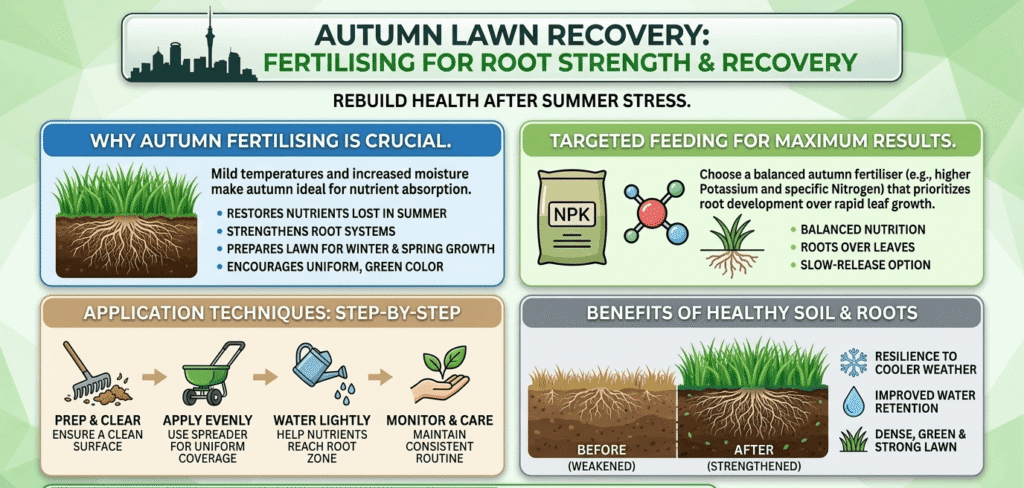
Fertilising for Recovery and Root Strength
Autumn is an ideal time to apply fertiliser that supports root development rather than rapid leaf growth.
A balanced fertiliser helps restore nutrients lost during summer and prepares the lawn for slower winter growth. This strengthens the root system and improves resilience against colder conditions.
Applying fertiliser evenly and following up with light watering helps nutrients reach the soil effectively.
Adjusting Mowing Practices for Autumn
Mowing should continue during autumn, but adjustments are necessary as growth begins to slow.
Gradually reduce mowing frequency and avoid cutting the grass too short. Maintaining moderate height helps protect the soil and supports ongoing recovery.
Consistent mowing ensures the lawn remains even and prevents excessive growth in certain areas.
For larger properties, a ride-on mowing service can help maintain a uniform finish efficiently.
Preparing Your Lawn for Winter
Autumn lawn care should focus on preparing the lawn for the colder months ahead.
Key steps include:
Ensuring proper drainage
Maintaining consistent grass height
Controlling weeds
Strengthening the root system
Taking these steps reduces the impact of winter conditions and allows the lawn to recover more quickly when temperatures rise again.
Establishing a Consistent Maintenance Plan
Recovery does not happen instantly. Maintaining a consistent care routine throughout autumn is essential for achieving long-term results.
Regular mowing, monitoring for weeds, and maintaining soil health all contribute to a stronger and more stable lawn.
A professional lawn maintenance service can provide structured and ongoing care, ensuring your lawn continues to improve without interruption.
Common Autumn Lawn Care Mistakes
Several mistakes can slow down lawn recovery during autumn.
Neglecting debris removal can block sunlight and reduce growth. Cutting grass too short can weaken the lawn before winter. Ignoring soil compaction or drainage issues limits the effectiveness of other treatments.
Delaying weed control allows unwanted plants to establish themselves more firmly.
Avoiding these issues helps ensure your lawn recovers properly and remains healthy.
Conclusion
Autumn is one of the most important seasons for restoring and strengthening your lawn in Auckland. Addressing summer damage, improving soil conditions, and maintaining a consistent care routine all contribute to better long-term results.
By taking a structured approach during this period, you can prepare your lawn for winter and ensure it returns stronger in the following season.
For reliable and professional support, visit Complete Lawn Solutions to keep your lawn in optimal condition throughout the year.