
Auckland Lawn Care Calendar Month by Month Lawn Maintenance Guide

Maintaining a healthy lawn in Auckland requires a consistent and structured approach throughout the year. The region’s climate, with its mix of rainfall, humidity, and seasonal temperature changes, creates varying conditions that directly impact lawn growth, soil quality, and overall appearance.

A well-planned monthly routine ensures your lawn remains in good condition regardless of seasonal shifts. This guide provides a practical month-by-month breakdown to help you manage lawn care effectively across the year.

Why a Month by Month Lawn Care Plan Is Important

Lawn care in Auckland is not a one-time task. Conditions change throughout the year, and each season brings its own challenges. Without a clear plan, issues such as poor growth, weed infestation, and soil problems can develop quickly.

Following a structured schedule allows you to:

  • Maintain consistent lawn quality
  • Respond to seasonal changes at the right time
  • Improve soil condition and root strength
  • Reduce the need for major repairs

A proactive approach leads to better long-term results and a more reliable lawn surface.

January Managing Summer Heat and Dry Conditions

January is typically one of the warmest months in Auckland. Lawns are exposed to increased sunlight and reduced soil moisture, which can slow growth and create dry areas.

The focus during this period should be on moisture retention and careful mowing. Grass should be kept slightly longer to protect the soil and reduce evaporation. Watering should be done early in the morning to allow proper absorption.

Maintaining a consistent mowing schedule is important, but it should be done carefully to avoid stressing the lawn. Using a professional lawn mowing service in Auckland ensures the correct height is maintained without damaging the grass.

February Maintaining Lawn Stability

Dry conditions can continue into February, requiring ongoing attention to hydration and lawn condition.

It is important to monitor areas that may be drying out faster than others. Adjust watering as needed and avoid allowing the lawn to become overly dry.

For larger properties, maintaining even coverage can be more challenging. A ride-on mowing service helps maintain consistency across larger areas and improves overall efficiency.

March: Beginning Autumn Recovery

As temperatures begin to ease, lawns start to recover from summer stress. This is the time to address any visible damage such as patchy or thinning areas.

Light fertilisation can support recovery, while gradual adjustments to mowing frequency help the lawn transition into cooler conditions. Preparing early ensures the lawn is in a better position for autumn growth.

April: Strengthening Soil and Root Health

April provides favourable conditions for improving soil quality and supporting root development.

This is a suitable time for aeration if the soil has become compacted. Improving soil structure allows better movement of air, water, and nutrients.

Weed activity may also increase during this period. Addressing it early prevents further spread. A weed spraying service can help manage unwanted growth effectively.

May: Preparing for Increased Rainfall

Rainfall typically becomes more consistent in May, which can affect soil condition and drainage.

Clearing debris such as leaves and organic matter is important to prevent blockage of sunlight and airflow. Monitoring drainage is also essential, as poor water movement can lead to long-term issues.

Mowing frequency should be reduced as growth begins to slow.

June: Managing Wet Winter Conditions

June marks the beginning of wetter conditions. Lawns may become saturated, making them more vulnerable to damage.

It is important to avoid walking on wet grass, as this can lead to soil compaction. Maintaining a moderate grass height helps protect the soil and reduces exposure to excess moisture.

If drainage issues become noticeable, a landscaping service in Auckland can help improve water flow and soil structure.

July: Minimising Damage During Peak Winter

July is typically one of the wettest months, and lawn activity should be kept to a minimum.

Focus on preserving the current condition rather than making major changes. Avoid unnecessary mowing and reduce foot traffic where possible.

Controlling moss and weeds during this time helps prevent problems from carrying into spring.

August: Preparing for Seasonal Transition

As winter begins to ease, August is the time to prepare your lawn for increased growth.

This includes clearing debris, assessing lawn condition, and planning any required repairs or treatments. Early preparation ensures a smoother transition into spring.

September: Supporting Early Spring Growth

Growth begins to increase in September, making it important to resume regular lawn care practices.

Mowing frequency should gradually increase, and fertilisation can be introduced to support new growth. Repairing any remaining bare areas helps create a more even surface.

Consistency during this period sets the foundation for strong growth.

October: Promoting Healthy Lawn Development

October provides ideal conditions for lawn growth. Regular mowing, proper watering, and ongoing monitoring of weed activity are essential.

Maintaining a consistent routine helps improve lawn density and overall appearance. This is a key period for building strength before summer.

November: Preparing for Warmer Conditions

Temperatures begin to rise in November, requiring adjustments to lawn care practices.

Grass height should be slightly increased to protect the soil from heat. Monitoring moisture levels and maintaining soil health are also important.

Preparing early reduces the impact of summer stress.

December: Managing Early Summer Demand

December marks the start of increased lawn usage and warmer conditions.

Maintaining regular mowing and effective watering helps keep the lawn stable. High-traffic areas should be monitored to prevent wear and damage.

For consistent results during this period, a professional lawn maintenance service can ensure your lawn remains in good condition without interruption.

Maintaining Consistency Throughout the Year

While each month requires specific actions, consistency remains the most important factor in lawn care.

Regular monitoring, timely adjustments, and a structured routine ensure that your lawn remains healthy regardless of seasonal changes.

Addressing issues early prevents them from developing into larger problems.

Conclusion

Auckland’s climate requires a year-round approach to lawn care. By following a month-by-month plan, you can manage changing conditions effectively and maintain a strong, healthy lawn throughout the year.

Each stage of the year plays a role in supporting growth, improving soil condition, and preventing damage. With the right approach, your lawn can remain consistent, durable, and visually appealing.

For reliable and professional support, visit Complete Lawn Solutions to keep your lawn performing at its best in every season.

Winter in Auckland brings frequent rainfall, high humidity, and reduced sunlight. While the climate is relatively mild compared to other regions, these conditions can still create serious challenges for lawn health. Excess moisture, compacted soil, and slower grass growth can weaken your lawn and lead to long-term damage if not managed correctly.

Protecting your lawn during Auckland’s wet winters requires a proactive approach. By focusing on drainage, soil condition, mowing practices, and weed control, you can maintain a stable and healthy lawn throughout the colder months.

Understanding Winter Lawn Conditions in Auckland

Auckland winters are typically wet rather than cold. Persistent rainfall can saturate the soil, limiting oxygen availability and slowing root activity. Grass growth naturally decreases due to reduced sunlight and cooler temperatures, making the lawn more vulnerable to stress.

Common winter lawn issues include:

  • Waterlogged or muddy areas

  • Soil compaction

  • Moss and weed growth

  • Uneven or thinning grass

Understanding these conditions helps you take preventative steps rather than reacting after damage occurs.

Managing Excess Water and Drainage

Managing Excess Water and Drainage

One of the biggest challenges during winter is excess water. Poor drainage can lead to standing water, which restricts oxygen flow and weakens the root system.

Improving drainage should be a priority. Simple steps such as levelling uneven areas and reducing soil compaction can make a significant difference. Adding organic matter can also improve the soil’s ability to manage moisture.

For more advanced drainage problems, a professional landscaping service in Auckland can help design long-term solutions that prevent water buildup and protect your lawn.

Avoiding Soil Compaction

Wet soil is more vulnerable to compaction, especially when walked on frequently. Compacted soil restricts airflow and limits the movement of water and nutrients, which can slow down recovery and growth.

To minimise compaction:

  • Avoid walking on the lawn when it is saturated

  • Reduce heavy use during wet conditions

  • Spread foot traffic across different areas

Maintaining proper soil structure is essential for keeping your lawn healthy through winter.

Adjusting Mowing Practices

Grass growth slows significantly during winter, so mowing frequency should be reduced accordingly.

Cutting the lawn too short during this period can expose the soil to excess moisture and weaken the grass. Maintaining a slightly higher grass height helps protect the root system and improves overall resilience.

When mowing is required, ensure the lawn is not overly wet to avoid damaging the surface.

Using a professional lawn mowing service in Auckland can help maintain the correct height and prevent unnecessary stress on your lawn during winter.

Controlling Moss and Winter Weeds

Wet and shaded conditions create an ideal environment for moss and certain weeds to develop. These can quickly spread and compete with grass for space and nutrients.

Early identification and treatment are important to prevent widespread growth. Removing moss and controlling weeds helps maintain lawn density and reduces the risk of long-term damage.

A weed control and spraying service can effectively manage unwanted growth and protect the health of your lawn during winter.

Maintaining Lawn Health with Proper Nutrition

While growth slows during winter, your lawn still requires nutrients to maintain its structure and recover from stress.

Applying a balanced fertiliser designed for cooler conditions can help strengthen roots and improve resistance to disease. It is important to avoid excessive fertilisation, as this can lead to unnecessary strain.

Providing the right level of nutrients supports steady recovery and prepares your lawn for stronger growth in spring.

Repairing Damaged Areas Early

Winter conditions can quickly worsen existing lawn issues such as bare patches or uneven surfaces.

Addressing these areas early helps prevent further deterioration. Light soil preparation and reseeding can be effective in mild winter conditions, particularly in Auckland where temperatures are not extreme.

Keeping these areas stable reduces the need for extensive repairs later.

Managing Larger and High-Maintenance Properties

Larger properties or lawns with complex layouts require more structured maintenance during winter. Uneven terrain, slopes, and high-traffic areas are more prone to damage under wet conditions.

Maintaining consistency across these areas is essential for preventing long-term issues.

A ride-on mowing service can help manage larger lawns efficiently while maintaining an even and controlled finish.

Maintaining a Consistent Lawn Care Routine

Even though growth slows during winter, completely neglecting lawn care can lead to poor results.

A consistent approach should include:

  • Monitoring drainage and water buildup

  • Removing debris regularly

  • Managing weeds early

  • Maintaining appropriate grass height

Ongoing attention ensures your lawn remains stable and avoids major issues when the season changes.

A professional lawn maintenance service can provide structured care throughout winter, ensuring your lawn remains in good condition without interruption.

Common Winter Lawn Care Mistakes

Several common mistakes can negatively affect lawn health during wet conditions.

Walking on saturated soil can cause compaction and damage the grass. Allowing water to pool without addressing drainage can weaken the root system. Ignoring moss and weed growth allows them to spread more aggressively.

Cutting the lawn too short or mowing when the ground is too wet can also cause unnecessary damage.

Avoiding these issues helps maintain lawn stability and reduces the need for major repairs later.

Preparing for Spring Recovery

Winter lawn care should always consider the transition into spring. The steps you take during colder months directly impact how well your lawn recovers when temperatures rise.

By maintaining soil structure, controlling weeds, and preventing damage, you create a strong foundation for spring growth.

A well-managed lawn during winter will recover faster, grow more evenly, and require less intensive work in the next season.

Conclusion

Protecting your lawn during Auckland’s wet winters requires careful attention to drainage, soil condition, mowing practices, and weed control. While growth slows during this period, proper care ensures your lawn remains stable and avoids long-term damage.

By taking a proactive approach and maintaining consistent care, you can preserve the health of your lawn and prepare it for strong recovery in spring.

For professional support and reliable results, visit Complete Lawn Solutions to keep your lawn protected throughout Auckland’s wet winter season.

Autumn is a crucial period for restoring lawn health in Auckland. After the stress of summer heat and dry conditions, many lawns become weakened, discoloured, and uneven. Without proper care, these issues can worsen during winter, leading to long-term damage.

Taking the right steps in autumn helps your lawn recover, rebuild strength, and prepare for the cooler months ahead. This guide outlines a structured approach to autumn lawn recovery tailored specifically for Auckland properties.

Why Autumn Lawn Recovery Matters in Auckland

Auckland’s transition from summer to autumn brings milder temperatures and increased moisture. While these conditions support grass recovery, they also create an environment where weeds, moss, and soil issues can develop if left unmanaged.

Lawns that are not properly treated in autumn often struggle during winter and take longer to recover in spring. Strengthening your lawn during this period improves its ability to withstand seasonal changes and maintain consistent growth.

Assessing Lawn Condition After Summer

Before starting any recovery work, it is important to assess the condition of your lawn.

Common post-summer issues include:

  • Dry or brown patches

  • Compacted or hardened soil

  • Uneven growth

  • Increased weed presence

Identifying these problems early allows you to apply targeted solutions rather than general treatments.

If your lawn has become overgrown or uneven, restoring it with a professional lawn mowing service in Auckland can help reset the surface and prepare it for further recovery work.

Removing Debris and Preparing the Surface

Autumn often brings falling leaves and organic debris that can block sunlight and restrict airflow.

Clearing your lawn regularly prevents buildup and allows the grass to receive sufficient light and nutrients. Light raking also helps loosen the surface, improving soil exposure without damaging the grass.

A clean lawn creates the right conditions for recovery treatments to be effective.

Repairing Summer Damage

Summer stress can leave lawns patchy and weakened. Repairing these areas in autumn is essential to prevent further deterioration.

Start by loosening the soil in affected areas and adding topsoil if needed. Overseeding can help fill in thin or bare spots, improving overall lawn density.

Consistent watering supports new growth and helps the lawn recover evenly across all areas.

Aerating Compacted Soil

Soil compaction is a common issue in Auckland lawns, especially after summer activity and dry conditions.

Compacted soil restricts airflow and limits the movement of water and nutrients. Aeration helps relieve this pressure by creating small openings in the soil, allowing essential elements to reach the root system.

Improving soil structure during autumn supports stronger root development and prepares the lawn for winter conditions.

Managing Weed Growth Before Winter

Weeds remain active during autumn and can spread quickly if not controlled.

Addressing weed growth at this stage prevents them from establishing deeper roots and returning more aggressively in spring.

Targeted treatments are often required for effective control. Using a professional weed spraying service ensures weeds are removed without affecting the surrounding grass.

Early action reduces competition for nutrients and helps your lawn recover more efficiently.

Improving Soil Quality and Drainage

Auckland’s soil conditions can lead to drainage problems, especially during wetter months.

Improving soil quality helps prevent waterlogging and supports healthy root systems. Adding organic material such as compost can enhance soil structure and increase its ability to retain moisture without becoming saturated.

If drainage issues are significant, a landscaping service in Auckland can provide long-term solutions tailored to your property.

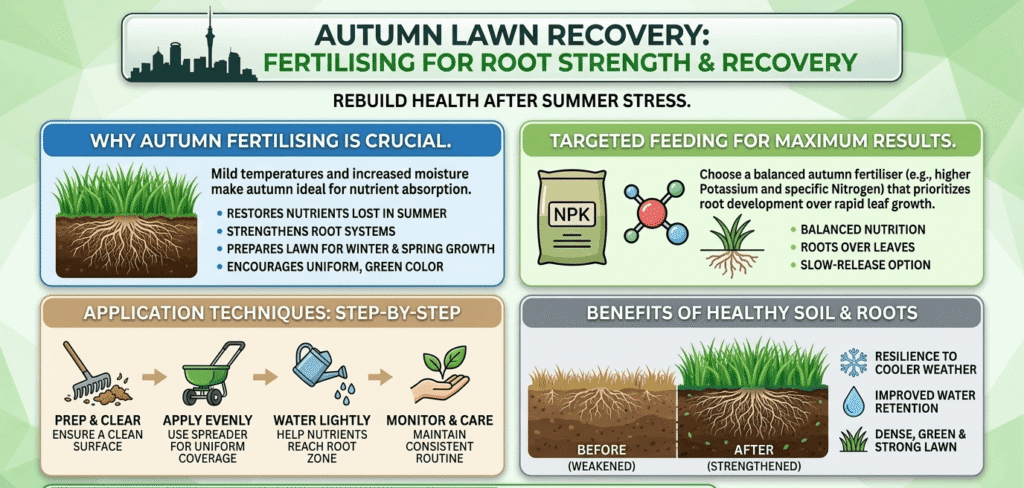
Fertilising for Recovery and Root Strength

Fertilising for Recovery and Root Strength

Autumn is an ideal time to apply fertiliser that supports root development rather than rapid leaf growth.

A balanced fertiliser helps restore nutrients lost during summer and prepares the lawn for slower winter growth. This strengthens the root system and improves resilience against colder conditions.

Applying fertiliser evenly and following up with light watering helps nutrients reach the soil effectively.

Adjusting Mowing Practices for Autumn

Mowing should continue during autumn, but adjustments are necessary as growth begins to slow.

Gradually reduce mowing frequency and avoid cutting the grass too short. Maintaining moderate height helps protect the soil and supports ongoing recovery.

Consistent mowing ensures the lawn remains even and prevents excessive growth in certain areas.

For larger properties, a ride-on mowing service can help maintain a uniform finish efficiently.

Preparing Your Lawn for Winter

Autumn lawn care should focus on preparing the lawn for the colder months ahead.

Key steps include:

  • Ensuring proper drainage

  • Maintaining consistent grass height

  • Controlling weeds

  • Strengthening the root system

Taking these steps reduces the impact of winter conditions and allows the lawn to recover more quickly when temperatures rise again.

Establishing a Consistent Maintenance Plan

Recovery does not happen instantly. Maintaining a consistent care routine throughout autumn is essential for achieving long-term results.

Regular mowing, monitoring for weeds, and maintaining soil health all contribute to a stronger and more stable lawn.

A professional lawn maintenance service can provide structured and ongoing care, ensuring your lawn continues to improve without interruption.

Common Autumn Lawn Care Mistakes

Several mistakes can slow down lawn recovery during autumn.

Neglecting debris removal can block sunlight and reduce growth. Cutting grass too short can weaken the lawn before winter. Ignoring soil compaction or drainage issues limits the effectiveness of other treatments.

Delaying weed control allows unwanted plants to establish themselves more firmly.

Avoiding these issues helps ensure your lawn recovers properly and remains healthy.

Conclusion

Autumn is one of the most important seasons for restoring and strengthening your lawn in Auckland. Addressing summer damage, improving soil conditions, and maintaining a consistent care routine all contribute to better long-term results.

By taking a structured approach during this period, you can prepare your lawn for winter and ensure it returns stronger in the following season.

For reliable and professional support, visit Complete Lawn Solutions to keep your lawn in optimal condition throughout the year.

Summer in Auckland can put significant stress on your lawn. While the region is known for regular rainfall, the warmer months often bring dry periods, higher temperatures, and increased evaporation. These conditions can weaken grass, cause discolouration, and lead to uneven growth if not managed properly.

Maintaining a healthy lawn during summer requires a structured approach that focuses on moisture management, mowing techniques, soil health, and consistent care. This guide outlines practical and effective summer lawn care strategies tailored specifically for Auckland’s conditions.

Understanding Summer Lawn Stress in Auckland

During summer, lawns are exposed to longer daylight hours, stronger sunlight, and reduced soil moisture. Even in areas that receive occasional rain, the intensity of heat can quickly dry out the topsoil.

Common issues during Auckland summers include:

  • Dry or brown patches

  • Slow or uneven growth

  • Increased weed activity

  • Soil hardening and reduced water absorption

Understanding these challenges is the first step toward protecting your lawn and maintaining its appearance throughout the season.

Adjust Your Mowing Strategy for Summer

Mowing practices that work in cooler months can damage your lawn during summer if not adjusted.

Grass should be kept slightly longer during dry conditions. Taller grass provides shade to the soil, reducing moisture loss and protecting the root system from heat stress.

Avoid cutting too much at once. Gradual trimming helps maintain lawn health and prevents unnecessary strain.

Consistency is also important. Instead of infrequent heavy mowing, maintain a regular schedule to keep the lawn balanced.

For consistent results and proper height management, using a professional lawn mowing service in Auckland helps maintain your lawn without risking damage during peak heat periods.

Watering Techniques for Dry Conditions

Watering Techniques for Dry Conditions

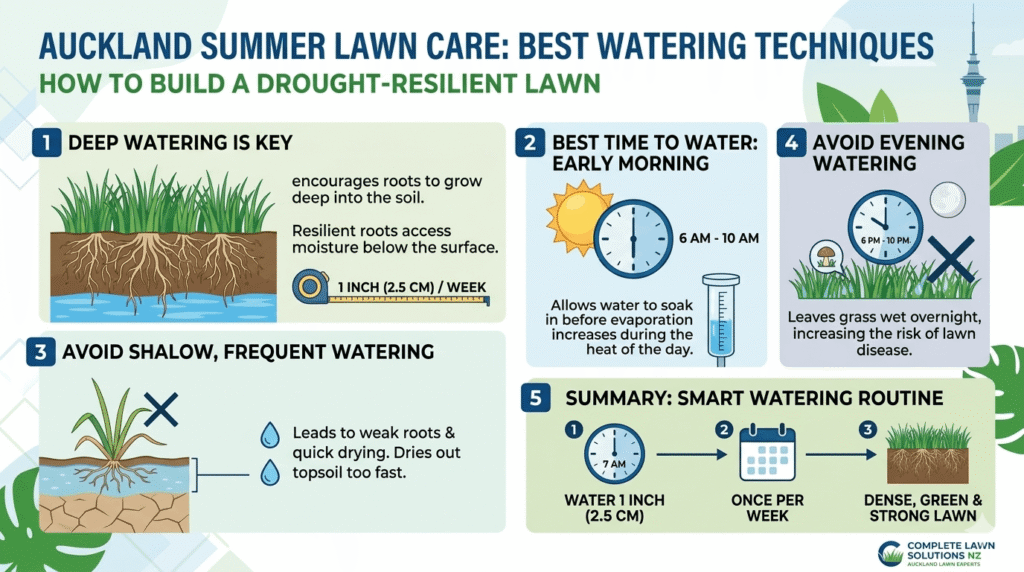
Watering is one of the most important aspects of summer lawn care. However, how you water is just as important as how often you water.

Deep watering encourages roots to grow further into the soil, making the lawn more resilient during dry spells. Shallow watering, on the other hand, leads to weaker roots and quicker drying.

The best time to water your lawn is early in the morning. This allows moisture to penetrate the soil before evaporation increases during the day.

Avoid watering in the evening, as excess moisture overnight can increase the risk of disease.

Maintaining the right balance ensures your lawn receives enough hydration without becoming oversaturated.

Preventing Dry Patches and Lawn Burn

Dry patches are a common issue during Auckland summers. These areas often appear when water distribution is uneven or when the soil becomes too compacted.

To reduce the risk of dry spots:

  • Ensure even watering coverage

  • Avoid mowing too short

  • Improve soil condition where needed

If dry patches have already formed, lightly loosening the soil and reseeding can help restore those areas.

Consistent care and early intervention prevent these patches from spreading and affecting larger sections of your lawn.

Managing Weed Growth in Summer

Weeds tend to thrive in dry conditions, especially when lawns are weakened by heat. They compete with grass for nutrients and water, making it harder for your lawn to stay healthy.

Early control is essential. Removing weeds before they spread reduces competition and allows your lawn to recover more effectively.

Targeted treatment methods are often required to fully eliminate persistent weeds. Using a professional weed spraying service ensures that unwanted growth is controlled without harming the surrounding grass.

Regular monitoring throughout summer helps prevent reinfestation and keeps your lawn looking clean and maintained.

Soil Health and Moisture Retention

Healthy soil plays a critical role in how well your lawn performs during dry conditions. Soil that retains moisture effectively can support grass growth even during periods of limited rainfall.

Improving soil structure can involve:

  • Adding organic matter

  • Reducing compaction

  • Encouraging deeper root systems

Aeration can also help improve water absorption by allowing moisture to penetrate deeper into the soil rather than running off the surface.

These improvements create a more stable environment for your lawn and reduce the impact of heat stress.

Lawn Feeding During Summer

Fertilising during summer should be approached carefully. While nutrients are important, excessive or incorrect application can place additional stress on the lawn.

Using a balanced fertiliser in controlled amounts helps maintain steady growth without overwhelming the grass. Slow-release products are often preferred, as they provide nutrients gradually.

Timing is also important. Applying fertiliser during extreme heat should be avoided, as it can lead to further stress.

Light watering after application helps nutrients move into the soil where they can be absorbed more effectively by the roots.

Dealing with High-Traffic Areas

Increased outdoor activity during summer can lead to worn or compacted areas on your lawn. Foot traffic places additional pressure on already stressed grass.

To minimise damage:

  • Rotate usage of lawn areas where possible

  • Avoid heavy activity during peak heat

  • Repair worn sections early

For larger properties or areas with frequent use, a ride-on mowing service helps maintain even coverage and reduces strain on the lawn.

Maintaining Lawn Edges and Appearance

Even during dry conditions, maintaining a clean and defined lawn appearance is important. Regular edging and trimming improve the overall look and prevent overgrowth from spreading into unwanted areas.

A well-maintained lawn not only looks better but also supports healthier growth by reducing competition between grass and surrounding plants.

Consistent upkeep ensures your lawn remains visually appealing throughout the summer season.

When to Consider Professional Support

Managing lawn care during summer can become challenging, especially for larger properties or lawns with existing issues such as poor drainage or heavy weed growth.

Professional services provide structured care and ensure that all aspects of lawn maintenance are handled correctly.

A professional lawn maintenance service can manage mowing, weed control, and overall lawn health, reducing the risk of long-term damage during dry periods.

Common Summer Lawn Care Mistakes

Cutting grass too short exposes the soil to direct sunlight and increases moisture loss. Inconsistent watering leads to uneven growth and weak root systems. Ignoring early signs of stress allows minor issues to develop into larger problems.

Excessive fertiliser use or poor timing can also place unnecessary strain on the lawn.

Maintaining a consistent and balanced approach helps avoid these issues and supports long-term lawn health.

Conclusion

Maintaining a healthy lawn during Auckland’s summer requires careful attention to mowing, watering, soil health, and weed control. The combination of heat and dry conditions can quickly affect lawn quality if not managed properly.

By adjusting your lawn care practices and addressing issues early, you can protect your lawn from stress and maintain strong, even growth throughout the season.

For reliable and professional support, visit Complete Lawn Solutions to keep your lawn in optimal condition during Auckland’s dry summer months.

Spring is a key period for lawn care in Auckland. After months of cooler weather and increased rainfall, many lawns become compacted, uneven, and affected by weeds or moss. Taking the right steps at the start of the season allows your lawn to recover properly and grow stronger in the months ahead.

This guide outlines practical steps to prepare your lawn for spring conditions in Auckland and achieve consistent, healthy growth.

Why Spring Lawn Preparation Is Important in Auckland

Auckland’s climate creates specific conditions that affect lawn performance. Frequent rainfall, humidity, and dense soil can restrict airflow and weaken root systems. As a result, lawns may struggle to grow evenly or maintain a healthy appearance.

Spring preparation helps restore balance by improving soil condition, encouraging deeper root development, and supporting uniform grass growth. A properly prepared lawn is better equipped to handle seasonal changes and maintain its condition over time.

Lawn Clean-Up After Winter

The first step is clearing your lawn of any debris left behind during winter. Fallen leaves, small branches, and organic material can block sunlight and limit airflow if not removed.

Clearing the surface allows nutrients, water, and sunlight to reach the soil more effectively. Light raking can also help loosen the top layer without damaging the grass.

If your lawn has grown unevenly or become overgrown, restoring it with a professional lawn mowing service in Auckland can quickly bring it back to a manageable condition.

First Lawn Mow of the Season

The first cut of the season should be handled with care. Removing too much grass at once can put unnecessary strain on the lawn.

It is better to gradually reduce the height over several mowing sessions. Avoid cutting more than one-third of the grass length at a time. Mowing should always be done when the grass is dry to achieve a cleaner and more even finish.

For larger areas or properties, a ride-on mowing service can deliver consistent results while saving time.

Repairing Bare and Patchy Areas

Bare spots often appear after winter due to excess moisture or reduced sunlight. These areas should be treated early to prevent weeds from spreading.

Loosen the soil in affected sections to improve conditions for new growth. Adding topsoil can help support seed development. Reseeding these areas and maintaining steady moisture will encourage the grass to establish evenly.

Addressing these patches early helps create a more uniform lawn surface.

Weed Control in Early Spring

Weeds become more active as temperatures rise. If not managed early, they can spread quickly and compete with grass for essential nutrients.

Removing weeds at the beginning of the season reduces the chances of widespread growth later on. Manual removal combined with appropriate treatments can help keep your lawn clear.

For more effective results, a professional weed spraying service
can target problem areas while protecting surrounding grass.

Aerating Compacted Soil

Aerating Compacted Soil

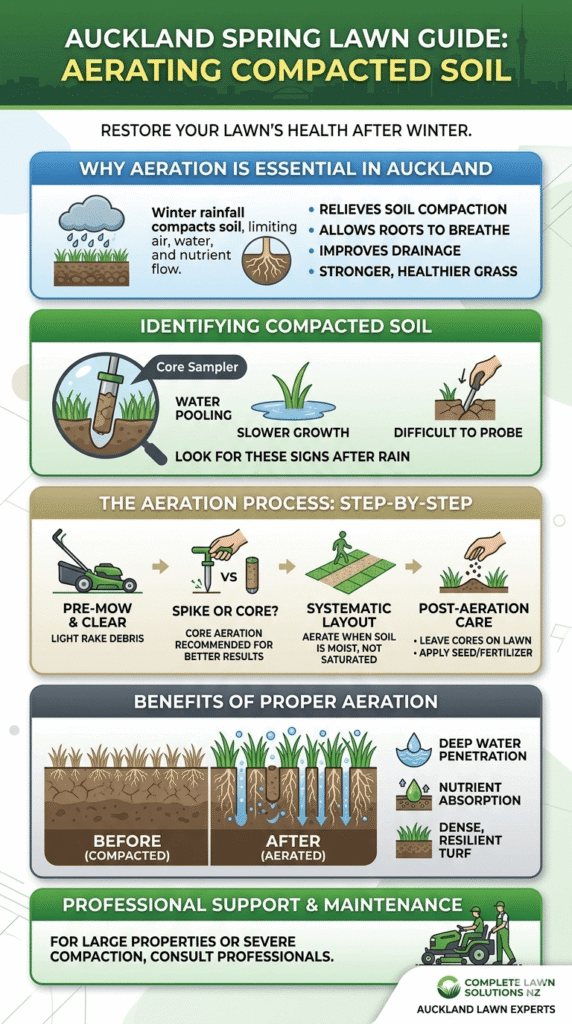
Compacted soil limits the movement of air, water, and nutrients within the lawn. This is a common issue in Auckland due to rainfall and regular use of outdoor spaces.

Aeration helps relieve this pressure by creating small openings in the soil. This allows essential elements to reach the root system more effectively and supports stronger growth.

Signs of compacted soil include water sitting on the surface, slow drainage, and uneven grass development.

Improving Drainage

Poor drainage can weaken grass and lead to long-term lawn issues. Waterlogged soil restricts oxygen flow and creates an environment where grass struggles to grow.

Improving drainage may involve levelling uneven areas or incorporating organic material into the soil to enhance its structure. In more complex situations, professional support may be required.

A landscaping service in Auckland can provide tailored solutions to improve water flow and overall lawn condition.

Fertilising for Spring Growth

Applying fertiliser in spring supports active growth and improves overall lawn health. A slow-release fertiliser is often recommended, as it provides nutrients gradually over time.

Products with higher nitrogen content are particularly useful during this stage, as they support strong leaf growth and improve lawn colour.

After applying fertiliser, light watering helps nutrients move into the soil where they can be absorbed more efficiently by the roots.

Establishing a Lawn Maintenance Routine

Maintaining a consistent routine is essential for keeping your lawn in good condition throughout the year.

Regular mowing encourages thicker growth and helps maintain an even surface. Watering should be done deeply at intervals rather than frequently at shallow levels, as this supports stronger root development.

Monitoring weed growth and maintaining clean edges also contribute to a well-kept appearance.

A professional lawn maintenance service can provide ongoing care and ensure your lawn remains in optimal condition without requiring constant attention.

Common Mistakes to Avoid

Small errors during spring preparation can affect long-term results. Cutting the grass too low can reduce its ability to recover and make it more vulnerable to damage. Delaying weed control allows unwanted growth to spread more aggressively.

Excessive watering can oversaturate the soil, while neglecting aeration or drainage improvements may limit overall lawn performance.

Paying attention to these factors and taking a balanced approach will help maintain steady and healthy growth.

Conclusion

Preparing your lawn for spring in Auckland involves more than basic mowing. It requires a combination of proper clean-up, soil improvement, weed control, and consistent maintenance.

By following a structured approach and addressing issues early, you can create a lawn that grows evenly, remains healthy, and performs well throughout the year.

For professional support and reliable results, visit Complete Lawn Solutions to get expert assistance tailored to your property.