
What Time Can You Mow Your Lawn in Auckland?

You can mow your lawn in Auckland between 7am and 10pm. Auckland Council advises that lawn mowing is acceptable during daylight hours, and that mowing should not start before 7am or continue after 10pm. This guide explains what the council rules mean, when mowing is considerate for neighbours, and which time of day gives the healthiest result for your lawn.

Is There a Legal Time to Mow Your Lawn in Auckland?

New Zealand has no single national law that sets fixed lawn mowing hours. Noise is managed under the Resource Management Act 1991 (RMA), which treats noise as a breach only when it is both excessive and unreasonable. Auckland Council then gives local guidance on what is acceptable for everyday household noise, including lawn mowers.

What Auckland Council noise guidance says about mowing

Auckland Council guidance sets a 15-hour window for lawn mowing:

  • Start: not before 7am.
  • Finish: not after 10pm.
  • Condition: during daylight hours.

Noise control officers judge each complaint by 5 factors: loudness, time of day, location, duration and how often the noise happens. A short mow at 8am is unlikely to be unreasonable, while a long mow before 7am can lead to a complaint.

Weekdays, weekends and public holidays

Auckland Council guidance uses the same 7am to 10pm window every day of the week. No separate legal hours apply to Saturdays, Sundays or public holidays. Many households still treat weekend and public holiday mornings as quieter times, so a later start is the considerate choice on those days.

What Is a Considerate Time to Mow?

A considerate time to mow in Auckland is between 9am and 6pm on most days. This range sits well inside the council window and avoids the times when neighbours are most likely to be asleep, eating or relaxing outdoors.

Early morning and evening tips for neighbours

Neighbourly mowing reduces the chance of a noise complaint. Follow these 4 simple habits:

  1. Start after 9am on weekends and public holidays.
  2. Finish before dinner time on warm summer evenings, when people use outdoor areas.
  3. Tell close neighbours before a long job, such as mowing a large section or lifestyle block.
  4. Service your mower regularly, because a blunt blade or loose part makes more noise.

Body corporates and shared properties

Body corporate properties often have their own rules for noise and grounds maintenance, in addition to council guidance. Check the body corporate operational rules before you mow shared lawns. For larger shared grounds, a scheduled service such as commercial lawn mowing keeps mowing within agreed weekday hours.

What Is the Best Time of Day to Mow for a Healthy Lawn?

Mid-morning, after the dew has dried, is the best time of day to mow a lawn. Dry grass cuts cleanly, the mower deck clogs less, and the lawn has the rest of the day to recover before evening. Late afternoon is the second-best time, once the strongest heat has passed.

Why you should not mow wet grass

Mowing wet grass gives a poor result for 3 reasons:

  1. Uneven cut: wet blades bend and tear instead of cutting cleanly.
  2. Clumping: wet clippings form clumps that smother the grass underneath.
  3. Soil damage: mower wheels compact soft, wet soil and leave ruts.

Wait until the surface is dry, especially after heavy rain. Our guide on how to protect your lawn during Auckland’s wet winters explains how to look after waterlogged lawns.

Mowing in hot, dry Auckland summers

Mowing in the middle of a hot day stresses grass and dries out the soil. During Auckland summers, mow in the morning or late afternoon, raise the mower height slightly, and avoid cutting more than one-third of the grass blade in a single mow. Read our summer lawn care tips for Auckland for more on dry-weather lawn care.

How Does Complete Lawn Solutions Schedule Mowing?

Complete Lawn Solutions schedules lawn mowing from Monday to Friday, 9am to 5pm. These hours sit inside Auckland Council guidance and avoid early mornings, evenings and weekends, which keeps noise away from the times neighbours value most. Our team provides regular lawn mowing in Auckland for homes, lifestyle blocks and commercial sites, and offers catch mowing when you want the clippings collected for a tidy finish.

Lawn Mowing Times in Auckland – FAQs

What time can I legally mow my lawn in NZ?

New Zealand has no national law that sets exact mowing hours. Councils manage noise under the Resource Management Act 1991. Auckland Council advises mowing during daylight hours, not before 7am and not after 10pm.

Can I mow my lawn on a Sunday in Auckland?

Yes, you can mow your lawn on a Sunday in Auckland. The council guidance of 7am to 10pm applies every day, including Sundays and public holidays. A later start, after 9am, is the considerate choice on weekends.

Can you mow the lawn when it is wet?

Mowing a wet lawn is possible, but it is not recommended. Wet grass tears instead of cutting cleanly, clippings clump on the surface, and mower wheels can damage soft soil. Wait until the grass is dry.

What is the best time of day to mow grass?

Mid-morning is the best time of day to mow grass, once the dew has dried. Late afternoon is the next best option. Avoid the hottest part of the day during summer.

Who can I complain to about mowing noise in Auckland?

Auckland Council handles noise complaints in Auckland. Call Auckland Council while the noise is happening – the council takes noise calls day or night. A noise control officer then assesses whether the noise is excessive and unreasonable.

Mowing at the Right Time for Your Lawn and Your Neighbours

The right time to mow in Auckland is inside the council window of 7am to 10pm, when the grass is dry and the day is not at its hottest. Mid-morning on a weekday gives the cleanest cut and the least disturbance for neighbours. Complete Lawn Solutions mows on weekdays within these hours, so your lawn stays tidy without weekend noise.
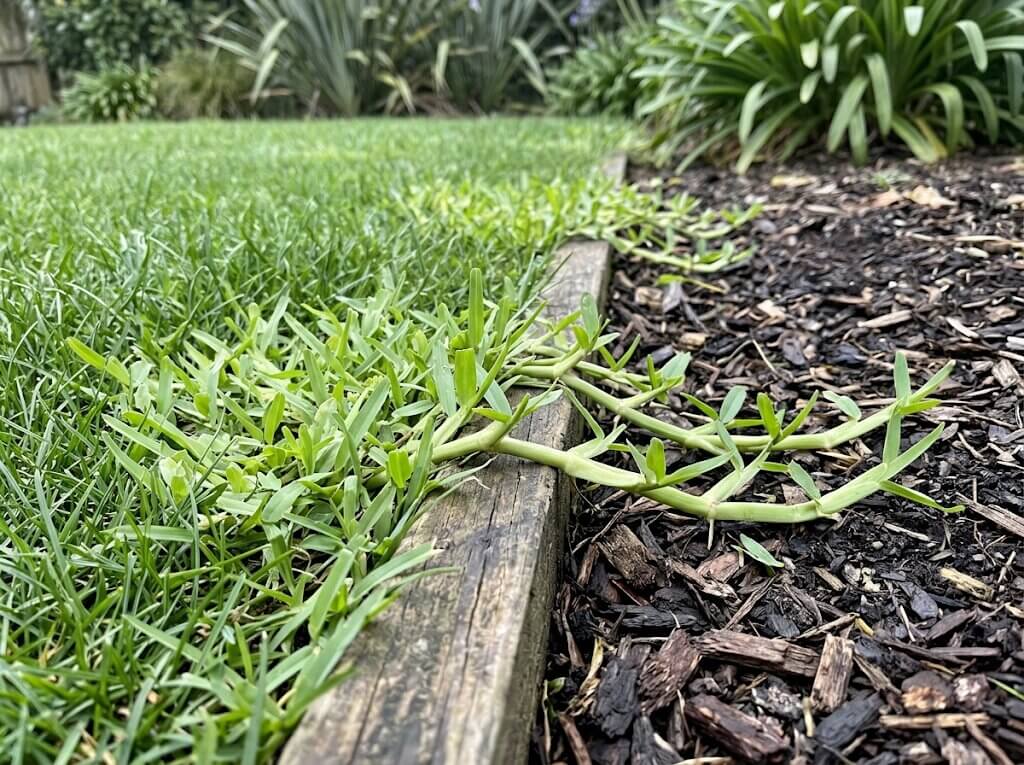
To get rid of kikuyu grass, you need to remove both its surface runners and its underground rhizomes, then fill the space with a thick, healthy lawn so it cannot return. Small patches can be dug out by hand, larger areas can be smothered or spot-treated, and every method needs follow-up checks over at least one growing season.

Key takeaways

  • Kikuyu spreads by surface runners (stolons) and underground stems (rhizomes), so both must be removed.
  • Dig out small patches; smother or spot-treat large areas.
  • Never compost kikuyu – bag it and put it in the rubbish.
  • Reseed bare soil quickly with a cool-season grass such as tall fescue or ryegrass.
  • A dense lawn and clean edges are the best long-term protection.

What Is Kikuyu Grass?

Kikuyu grass (Pennisetum clandestinum) is a fast-growing, warm-season grass that thrives in northern New Zealand. Some farmers sow it for paddocks and high-traffic areas, but in most home lawns it behaves like an invasive weed.

How to identify kikuyu in your lawn

Kikuyu is easiest to spot by its wide, light-green leaves, coarse feel and thick runners. Compared with ryegrass or fescue, its leaves are broader and flatter, and it forms a dense, spongy mat.

FeatureKikuyuRyegrass / fescue
LeafWide, flat, light greenNarrower, darker green
Feel underfootSpongy, thick matFiner, softer
How it spreadsRunners and underground rhizomesMostly clumps
Best growthHot, humid summerCooler spring and autumn

Why kikuyu spreads so easily in Auckland

Auckland’s warm, humid summers and mild winters suit kikuyu very well. Cool-season lawn grasses slow down in summer heat, while kikuyu grows faster, so it moves into any thin or bare patches. From there it creeps into garden beds, under fences and along paths, and can take over a whole lawn within a few seasons.

How to Get Rid of Kikuyu Grass

The right method depends on how much kikuyu you have. Small patches can usually be removed by hand, while large areas need smothering or treatment followed by reseeding. Kikuyu is easiest to control when it is actively growing in late spring and summer.

Dig out small patches by hand

Digging out kikuyu works well for small patches and garden beds, but it needs patience:

  1. Water the area the day before so the soil is soft.
  2. Lift the turf with a spade or fork, digging deep enough to reach the underground rhizomes.
  3. Remove every piece of runner you can find – even a small piece left in the soil can regrow.
  4. Bag the removed kikuyu and put it in the rubbish. Do not compost it.
  5. Check the area every few weeks and pull out new shoots as soon as they appear.

Smother larger areas

Smothering is a simple non-chemical option for larger areas. Mow the kikuyu as short as possible, cover it with overlapping cardboard or weed mat, and add a thick layer of mulch on top. Leave it in place, check the edges for escaping runners, and repeat if new growth comes through.

Use herbicides carefully

Herbicides can help when kikuyu covers a large area. Non-selective products kill kikuyu and any other plant they touch, so they are mainly used for spot treatment or before a full lawn renovation. Some selective products can suppress kikuyu in other lawn grasses, but they need careful use. Always use a product registered for kikuyu control in New Zealand, follow the label, spray in calm, dry weather and keep it away from garden plants. Several treatments are usually needed because rhizomes can regrow.

Block kikuyu at the edges

To stop kikuyu creeping into garden beds, install an edging barrier along borders. The barrier must go deep enough to stop the underground rhizomes, not just the surface runners.

If other weeds are also a problem, our guide on how to get rid of weeds in Auckland lawns explains methods that work alongside kikuyu removal.

Restoring Your Lawn After Removing Kikuyu

Reseeding straight after removal is the key to stopping kikuyu from coming back, because bare soil gives leftover rhizomes room to regrow.

  1. Clear all dead kikuyu, thatch, runners and debris.
  2. Loosen the topsoil, remove remaining roots and level the area so water drains evenly.
  3. Sow a cool-season grass such as tall fescue or ryegrass. Autumn and spring are the easiest times for new seed to establish in Auckland.
  4. Keep the soil evenly moist until the new grass is established.

How to Stop Kikuyu Coming Back

A dense, healthy lawn is the strongest defence against kikuyu, because thick grass shades the soil and leaves no gaps.

  • Mow at the right height for your grass type, and avoid scalping.
  • Fertilise regularly to keep the lawn thick.
  • Water deeply during dry spells rather than lightly and often.
  • Check edges, fences and garden borders, and remove stray runners early.
  • Reseed bare patches quickly.

How Complete Lawn Solutions Can Help

Complete Lawn Solutions provides regular lawn mowing and vegetation control in Auckland. If kikuyu or other unwanted growth is taking over your lawn edges or garden beds, we can look at your property and suggest the right approach. Call 020 4161 7374 or request a free quote.

Frequently Asked Questions About Kikuyu Grass

Is kikuyu grass a weed in New Zealand?

Kikuyu is usually treated as a weed in New Zealand home lawns and gardens, although farmers sometimes sow it for pasture. It tolerates drought well, but its runners and underground rhizomes quickly overpower finer lawn grasses and invade garden beds, so it needs regular management.

Can you kill kikuyu grass without killing your lawn?

It is possible but difficult, because many treatments that affect kikuyu also damage other lawn grasses. Careful spot treatment, selective products used exactly as the label says, and edge barriers can help. Heavily infested lawns often need part or all of the area renovated and reseeded.

How long does it take to get rid of kikuyu grass?

Getting rid of kikuyu usually takes more than one growing season, because buried rhizomes can regrow after each treatment. Lasting control comes from regular checks, removing new shoots early and establishing a thick cover of new grass.

Keeping Your Auckland Lawn Kikuyu-Free

Getting rid of kikuyu grass in Auckland takes a mix of removal and prevention: dig or smother it, treat stubborn areas carefully, then reseed and keep the lawn thick. For help with overgrown edges and regular lawn mowing in Auckland, contact Complete Lawn Solutions for a free quote.